
Contents
- 1 The ROI Math: Are AI Influencers Cheaper Than Traditional Influencer Marketing?
- 1.1 Understanding Influencer Marketing Costs
- 1.2 What Are AI Influencers?
- 1.3 Comparing Cost Structures: AI vs Traditional Influencers
- 1.4 How to Calculate ROI for AI and Traditional Influencers
- 1.5 Benefits of AI Influencers Beyond Cost
- 1.6 Limitations of AI Influencers Compared to Traditional Marketing
- 1.7 Who Should Consider AI Influencers for Marketing?
- 1.8 People Also Ask (PAA)
- 1.9 Conclusion: Is AI Influencer Marketing the Cheaper Alternative?
- 1.10 Actionable Takeaways
The ROI Math: Are AI Influencers Cheaper Than Traditional Influencer Marketing?
Influencer marketing has become an essential part of brand strategies worldwide. But with the emergence of AI influencers, marketers are asking: Are AI influencers more cost-effective than traditional influencer marketing? This article explores the ROI math behind both methods, helping you decide which offers better value for your marketing budget.
Understanding Influencer Marketing Costs
Traditional influencer marketing involves partnering with real people who have established audiences on platforms like Instagram, TikTok, or YouTube. These influencers charge fees based on:
- Audience size and engagement
- Content type (e.g., posts, videos, stories)
- Campaign length and exclusivity
- Industry demand and brand alignment
Typically, costs vary anywhere from a few hundred dollars for micro-influencers to hundreds of thousands for celebrities. Additional expenses include agency fees, influencer management, and content production.
What Are AI Influencers?
AI influencers are virtual personalities created using artificial intelligence, CGI, and machine learning tools. They mimic human behaviors and engage followers on social media platforms without the usual limitations of human influencers. Popular examples include Shudu Gram and Lil Miquela.
Brands collaborate with AI influencers to produce digital content, often paying lower fees since there are no physical limitations, schedules, or personal demands involved.
Comparing Cost Structures: AI vs Traditional Influencers
Initial Costs
- Traditional Influencers: Fees can range from $100 to $100,000+ per post, depending on reach and celebrity status.
- AI Influencers: Costs often involve development or licensing fees, which can be a one-time or subscription model. Average campaigns start from $10,000 but vary widely.
Ongoing Costs
- Traditional: Continuous payments for campaigns, influencer management, and content collaboration.
- AI: Lower ongoing expenses due to automated content creation and no influencer negotiations.
Scalability
- Traditional: Scaling requires more influencers or higher payments, increasing costs exponentially.
- AI: Easily scalable with minimal extra costs—AI influencers can generate unlimited content rapidly.
How to Calculate ROI for AI and Traditional Influencers
Calculating ROI depends on multiple quantifiable factors:
- Cost of influencer engagement (fees, production, management)
- Audience reach and engagement rates (likes, shares, comments)
- Conversions and sales generated from the campaign
- Brand awareness lifted (measured via surveys or impressions)
ROI formula:
ROI = (Revenue from campaign – Cost of campaign) ÷ Cost of campaign x 100%
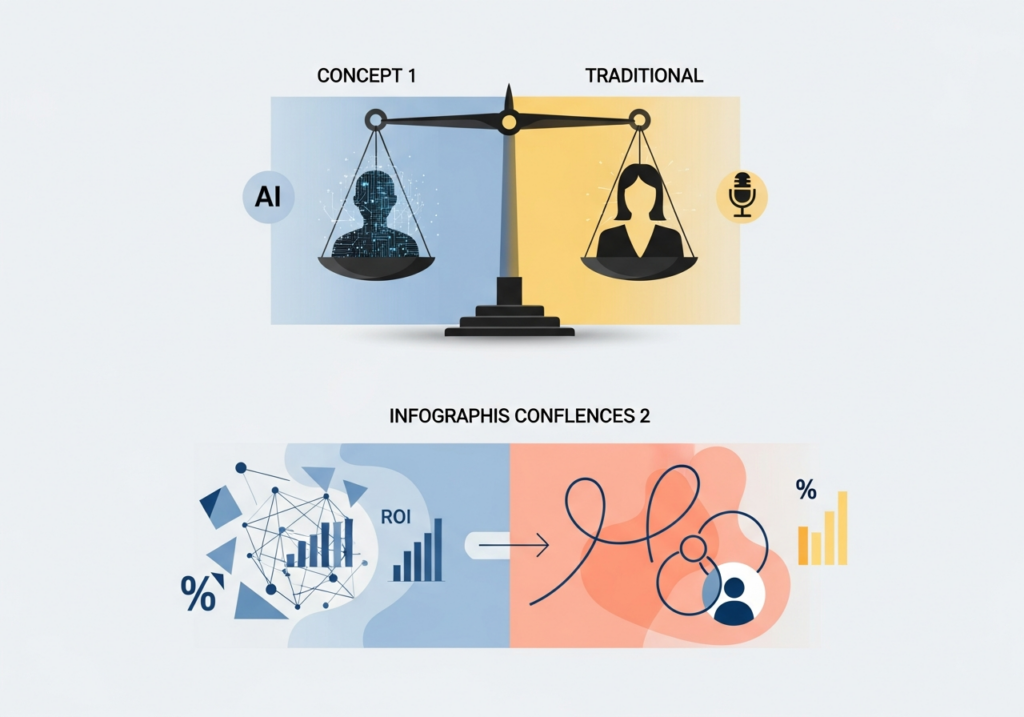
When AI influencers can deliver similar engagement and conversion levels at lower or comparable costs, their ROI often surpasses traditional influencer marketing.
Benefits of AI Influencers Beyond Cost
- 24/7 Availability: AI influencers can work round the clock, creating content without breaks.
- Control and Consistency: Brands maintain full creative control and consistent messaging.
- Risk Mitigation: No risk of influencer scandals or unpredictability.
- Targeted Personalization: AI can tailor content dynamically to specific audience segments.
Limitations of AI Influencers Compared to Traditional Marketing
- Lack of Authentic Human Connection: Some audiences still prefer genuine human interactions.
- Limited Emotional Appeal: AI personalities may lack the emotional nuance real influencers provide.
- Trust Issues: Transparency about AI origins is crucial to maintain audience trust.
Who Should Consider AI Influencers for Marketing?
- Brands with tech-savvy audiences open to new digital experiences.
- Businesses needing high-frequency content output at lower cost.
- Companies focusing on scalability without proportional increases in budget.
- Brands wanting full control over messaging and campaign consistency.
People Also Ask (PAA)
Are AI influencers cheaper than human influencers?
Generally, AI influencers can be more cost-effective over time due to lower ongoing costs and scalability, but initial setup may be higher.
Can AI influencers generate real engagement?
Yes, AI influencers often generate significant likes, comments, and shares, but the depth of engagement may differ from human influencers.
How do brands measure ROI on AI influencer campaigns?
Using similar metrics as traditional campaigns: cost, engagement, conversions, sales, and brand awareness, adjusted for AI content specifics.
Are AI influencers trusted by audiences?
While growing in popularity, transparency about their AI nature is critical to maintain audience trust and avoid backlash.
What are examples of AI influencer marketing platforms?
Platforms like Lil Miquela and Shudu Gram lead the AI influencer space for brand collaborations.
Conclusion: Is AI Influencer Marketing the Cheaper Alternative?
AI influencers offer a promising alternative to traditional influencer marketing by potentially lowering costs, increasing scalability, and offering unparalleled control. However, the effectiveness depends on your brand, target audience, and campaign goals.
While AI influencers can deliver a strong ROI, brands should weigh the value of authentic human connection and emotional engagement that traditional influencers excel at. For many companies, a hybrid approach—combining AI influencers with human creators—may provide the best balance of cost and impact.
Actionable Takeaways
- Assess your target audience’s openness to AI-generated content before committing fully.
- Calculate all costs involved, including content creation, licensing, and management for AI influencers.
- Track engagement and conversions meticulously to evaluate true ROI.
- Consider testing small AI campaigns alongside traditional influencers for comparison.
- Maintain transparency about AI involvement to build audience trust.
To stay competitive and future-ready, understanding the ROI math of AI influencers versus traditional influencer marketing is essential.